
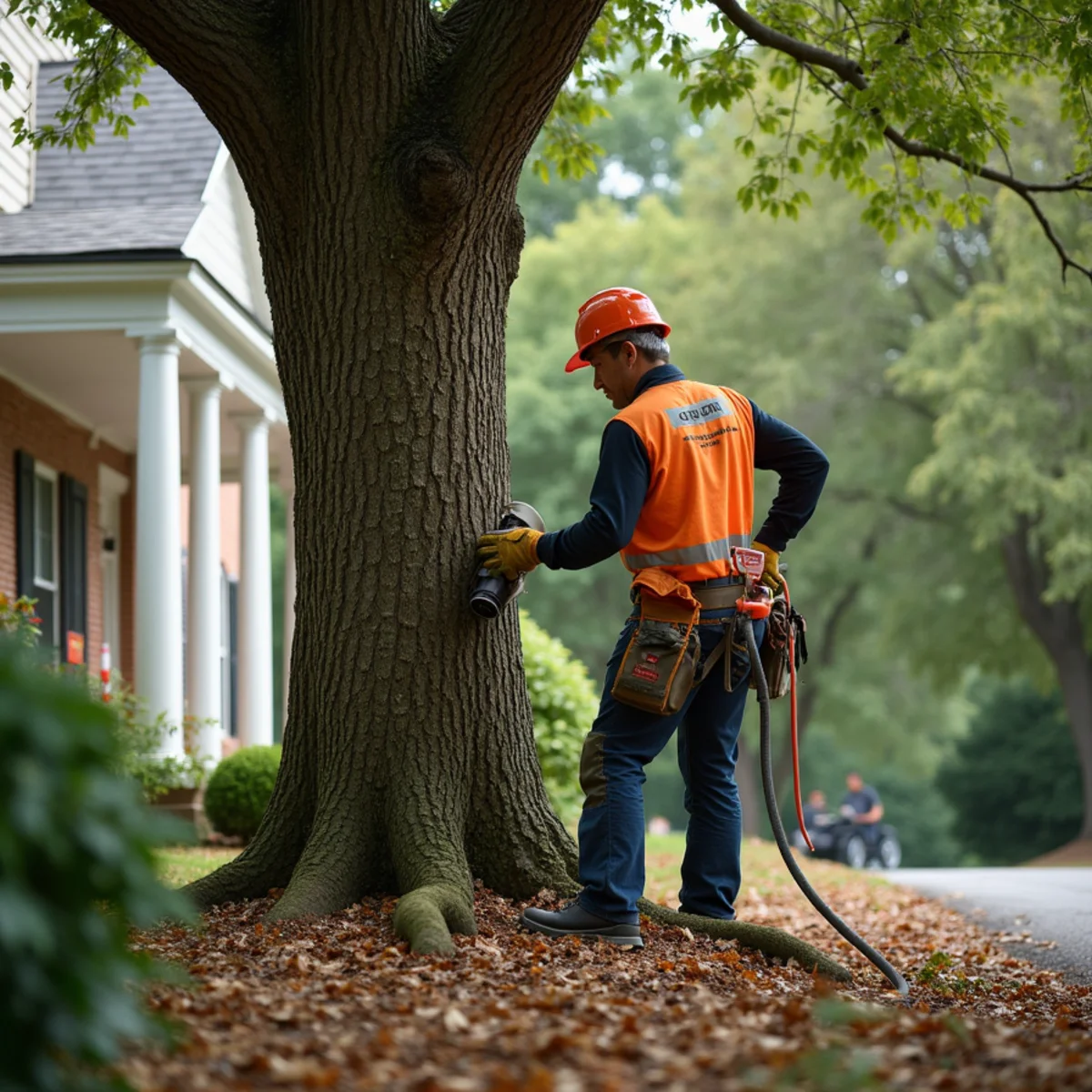
Caring for mature oaks in historic Salisbury neighborhoods requires root collar excavation to remove suffocating soil, air-spade aeration in compacted Piedmont clay, dynamic steel cabling for split-prone V-crotches, and strict winter-only pruning. Proper arboricultural preservation maintains these irreplaceable shade trees for generations. Call Joe's Tree Care at (855) 615-0568 for certified arborist evaluations in Salisbury, NC.
Salisbury's Urban Canopy Heritage: Century-Old Living Monuments
Salisbury is celebrated throughout North Carolina for its rich architectural history and its grand, century-old urban tree canopy. In historic districts like the West Square Historic District, Fulton Heights, and the Brooklyn South Square neighborhood, towering willow oaks (Quercus phellos), white oaks (Quercus alba), and southern red oaks (Quercus falcata) arch gracefully over historic Victorian and Craftsman homes.
Many of these historic oaks were planted between 1880 and 1930. While these majestic trees provide immense property value, summer cooling, and historical charm, they are living organisms operating at the outer boundary of their biological lifespan. Decades of urban development, street repaving, sidewalk trenching, and soil compaction place historic oaks under severe physiological stress.
The 4 Primary Threats Facing Historic Salisbury Oaks
To preserve mature oaks across Rowan County, property owners must understand the four primary threats endangering our historic trees:
- Piedmont Red Clay Soil Compaction: Decades of foot traffic, parked vehicles, lawnmowers, and driveway paving crush the pore spaces in Cecil clay soil. Without pore space, oxygen cannot diffuse down to fine feeder roots, causing gradual root asphyxiation and upper canopy dieback.
- Girdling Roots and 'Mulch Volcanoes': Piling thick layers of bark mulch directly against the base of an oak trunk (a "mulch volcano") traps moisture against the bark, rotting the root collar and encouraging roots to circle tightly around the trunk, strangling the tree's vascular cambium.
- Co-Dominant Stems and Heavy Horizontal Limbs: Many historic oaks developed multiple massive central stems with narrow "V-shaped" unions. As stems grow thicker, included bark wedges between them, creating a severe structural fault line that can split down the center during winter ice storms.
- Oak Decline Syndrome: When chronic summer drought combines with compacted soil and root damage, stressed oaks succumb to secondary pathogens like Hypoxylon canker (Biscogniauxia atropunctata) and two-lined chestnut borers.
Historic Oak Health & Structural Evaluation Scorecard
Our certified arborists use this diagnostic checklist to evaluate mature shade trees across historic Salisbury neighborhoods:
| Tree Anatomical Zone | Healthy Specimen Indicators | Signs of Decline / Hazard | Arborist Preservation Remedy |
|---|---|---|---|
| Upper Crown / Foliage | Deep green leaf color; dense canopy foliage out to branch tips. | Stagheading (dead bare branch tips protruding above crown). | Crown cleaning, therapeutic deadwood thinning, organic biostimulants. |
| Main Branch Unions | U-shaped branch crotches with raised bark ridges. | V-shaped crotches with vertical shear cracks or weeping sap. | Install dynamic synthetic cabling or through-rod steel bracing. |
| Trunk Flare / Buttress | Visible, bell-shaped flare expanding outward at ground grade. | Trunk enters ground like a telephone pole (buried flare); mulch volcano. | Air-spade root collar excavation to expose suffocated root flare. |
| Root Zone / Drip Line | Soft, porous soil covered with organic leaf mulch. | Hard, compacted bare clay; fungal shelf conks or honey mushrooms. | Radial air-spade trenching, mycorrhizal inoculants, soil aeration. |
Arboricultural Preservation Techniques for Historic Oaks
Preserving an 80-year-old willow oak or white oak requires specialized non-invasive arboriculture:
- Air-Spade Root Flare Excavation: Using a supersonic compressed air tool, our arborists blast away heavy clay and excess mulch from the base of the trunk without cutting or bruising delicate bark tissues. Exposing the natural root flare restores critical gas exchange.
- Radial Soil Aeration & Bio-Fertilization: We trench radial channels outward from the trunk into the root zone using compressed air, backfilling with a rich blend of compost, biochar, and beneficial mycorrhizal fungi to reverse decades of soil compaction.
- Dynamic Cabling and Structural Bracing: To safeguard heavy horizontal limbs extending over historic slate roofs or brick porches, we install dynamic synthetic arborist cables high in the canopy. These cables allow natural wind flex while catching heavy limbs if ice storms strike.
- Strict Winter Dormant Pruning: As detailed in our seasonal guidelines, mature oaks in North Carolina must never be trimmed during the spring or summer to prevent deadly Oak Wilt beetle transmission.
If you own historic property in Salisbury, contact Joe's Tree Care for a comprehensive tree health assessment in Salisbury. When an old giant has deteriorated beyond recovery, we provide meticulous crane tree removal in tight historic lots and regular restorative tree trimming.
Questions & Answers About This Topic
How can I tell if my historic oak tree in Salisbury has root rot?
Look for clusters of honey-colored mushrooms (Armillaria) or woody bracket fungi growing directly on the lower trunk flare or buttress roots. Additionally, thinning foliage and premature leaf drop in July are key symptoms of subterranean root decay.
Do I need city approval to remove a tree in a Salisbury Historic District?
Yes. If your property is located within a locally designated historic preservation district in Salisbury, removing a significant mature shade tree may require a Certificate of Appropriateness (COA) from the Salisbury Historic Preservation Commission.
How long can a mature willow oak live in central North Carolina?
In natural forest environments, willow oaks can live 120 to 150 years. In urban and suburban settings with paved surfaces and compacted soil, their average lifespan is typically 75 to 100 years, requiring proactive arborist care in their mature stages.
Can an old oak tree recover from stagheading?
If caught early, root flare aeration, deep-root watering during summer droughts, and therapeutic deadwood removal can halt staghead decline and stimulate healthy new secondary foliage.
Joe's Tree Care Field Editorial Team
Published by owner Joe and the arboricultural team at Joe's Tree Care. Serving Salisbury, Spencer, China Grove, and Rowan County with professional tree cutting, crane takedowns, and 24/7 storm damage recovery.