
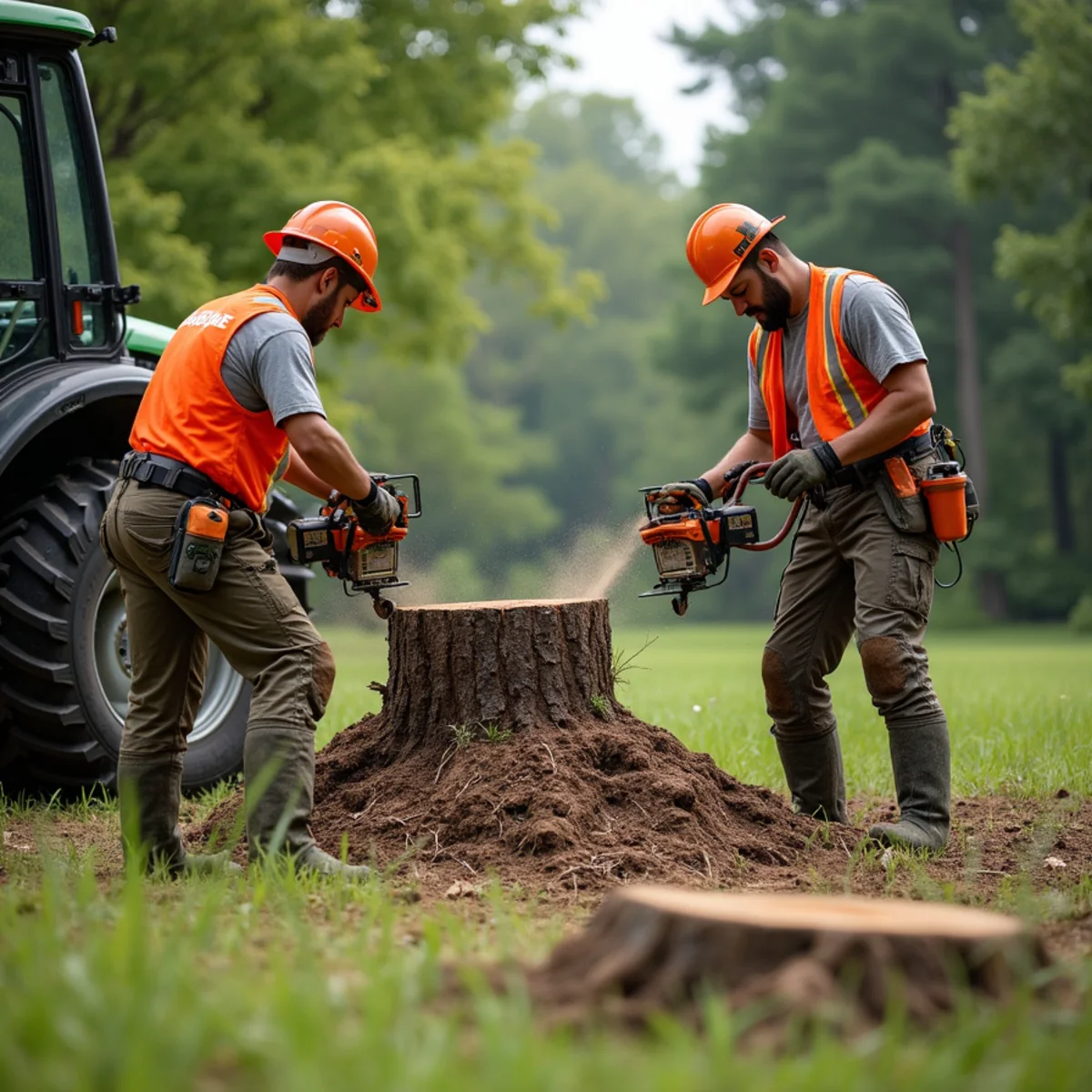
Stump grinding uses a high-speed carbide cutting wheel to shave a tree stump 6 to 12 inches below grade, leaving root systems to decompose naturally with zero lawn disruption. Full stump removal uses an excavator to dig out the entire root ball, creating massive soil craters and destroying turf. For 95% of Rowan County residential properties, stump grinding is the faster, more affordable, and turf-safe choice. Call Joe's Tree Care at (855) 615-0568 for free estimates.
Mechanical Difference: Stump Grinding vs. Excavator Removal
After a tree is cut down in your yard, property owners face an important landscaping decision: what to do with the remaining wood stump and surface root flare? Many homeowners use the terms "stump grinding" and "stump removal" interchangeably, but in arboriculture and land management, they represent completely different mechanical operations with vastly different impacts on your landscape:
- Stump Grinding (Non-Invasive): Our operators maneuver a specialized hydraulic machine equipped with a heavy steel cutting wheel tipped with tungsten-carbide teeth. The wheel sweeps back and forth across the stump, shaving the wood down 6 to 12 inches below the surface of the soil. The underground lateral roots remain in place to decay naturally over several years, creating minimal soil disturbance.
- Full Stump Excavation (Heavy Digging): A 10-to-20-ton tracked excavator or backhoe uses a steel bucket and ripper tooth to dig a wide trench around the tree, tear through lateral anchor roots, and pry the massive root ball out of the earth. This process creates a massive crater, disrupts underground utilities, and requires heavy dump trucks to transport the dirt-encrusted root ball to a commercial landfill.
Direct Comparison Matrix: Grinding vs. Full Excavator Removal
Compare the practical tradeoffs between stump grinding and backhoe extraction for residential properties in Salisbury, China Grove, and Rowan County:
| Comparison Factor | Stump Grinding (Standard) | Full Excavator Removal (Excavation) |
|---|---|---|
| Average Cost (Per Stump) | $150 – $350 (Affordable) | $800 – $2,000+ (High Machinery Cost) |
| Impact on Surrounding Lawn | Minimal; turf-friendly rubber tires; zero wheel ruts. | Severe; heavy tracks crush turf, sprinkler pipes, and flowerbeds. |
| Excavation Depth | 6 to 12 inches below ground grade (ideal for turf replanting). | 3 to 6 feet deep, removing complete root ball. |
| Soil Hole & Restoration | Small depression filled with organic wood mulch and topsoil. | Massive crater requiring 5 to 10 yards of imported fill dirt. |
| Best Application | Established residential yards, lawns, garden beds. | New home foundation digging, pool construction, commercial grading. |
The Soil Dynamics of Rowan County Red Clay
Understanding local geology is crucial when deciding how to handle tree stumps in central North Carolina. Salisbury and Rowan County sit atop dense Piedmont Cecil clay soil. This clay expands when wet and hardens into dense, concrete-like hardpan during hot summer months.
Attempting to dig out a mature oak or hickory root ball from dense red clay with heavy equipment requires immense breakout force. The excavator's tracks will churn the clay into deep ruts, compacting the surrounding soil and destroying drainage pathways. In contrast, our professional below-grade stump grinding service in Salisbury chips through the hardest oak timber while keeping your clay soil profile intact.
Why Leaving Stumps to Rot Naturally Is a Bad Idea
Some property owners consider saving money by letting a cut tree stump rot away naturally. In North Carolina's warm, humid climate, this approach creates serious property issues:
- Termite & Carpenter Ant Colonization: A dead hardwood stump is an open invitation for subterranean termites and carpenter ants. As the wood decomposes, insect colonies expand rapidly and frequently migrate across the lawn into your home's sill plates and subflooring.
- Mower Damage & Tripping Hazards: Low-cut stumps hidden by tall grass easily bend lawnmower crankshafts and shatter expensive mower blades. They also represent severe trip-and-fall hazards for children and pets.
- Unwanted Sucker Sprouting: Species like sweetgum, crape myrtle, and willow oak will produce dozens of aggressive root suckers for years after the tree is cut, requiring constant weeding and herbicide spraying.
How to Replant Grass or Garden Beds Over a Ground Stump
Once Joe's Tree Care grinds your stump 8 to 12 inches below grade, restoring a pristine green lawn is straightforward:
- Rake Out Excess Mulch: Remove approximately 70% of the ground wood chips (which make excellent weed-suppressing mulch for your flowerbeds).
- Add Rich Topsoil: Fill the depression with a 50/50 mix of rich topsoil and compost to grade level, firming it down lightly.
- Seed and Water: Spread tall fescue grass seed (the preferred turfgrass in the Piedmont) in September or October, cover with clean straw, and water daily until established.
If you are clearing multiple stumps for home additions or outbuildings, explore our comprehensive land and lot clearing solutions across Rowan County.
Questions & Answers About This Topic
Can I plant a new tree in the exact same spot where a stump was ground?
We recommend planting a new tree at least 3 to 5 feet away from the old stump location. Even after grinding 12 inches down, decaying subterranean lateral roots consume nitrogen in the soil and physically restrict new taproot growth.
How deep does Joe's Tree Care grind tree stumps?
Our standard grinding depth is 6 to 10 inches below grade, which is plenty of depth for installing sod, planting fescue grass seed, or paving sidewalks. Upon request, we can grind up to 14 to 16 inches deep for specific landscaping needs.
What happens to all the wood mulch created during stump grinding?
Stump grinding produces a rich mixture of soil and wood shavings. We backfill the hole with the nutrient-rich mixture and mound it slightly to allow for natural settling. Any excess mulch can be spread in your garden beds.
Will the roots grow back after stump grinding?
No. Once the main stump core and crown flare are ground below grade, the root system loses its vascular connection and ability to produce foliage. The remaining subterranean roots naturally decompose harmlessly over 3 to 7 years.
Joe's Tree Care Field Editorial Team
Published by owner Joe and the arboricultural team at Joe's Tree Care. Serving Salisbury, Spencer, China Grove, and Rowan County with professional tree cutting, crane takedowns, and 24/7 storm damage recovery.